Additional Menu
Anggota IKAPI
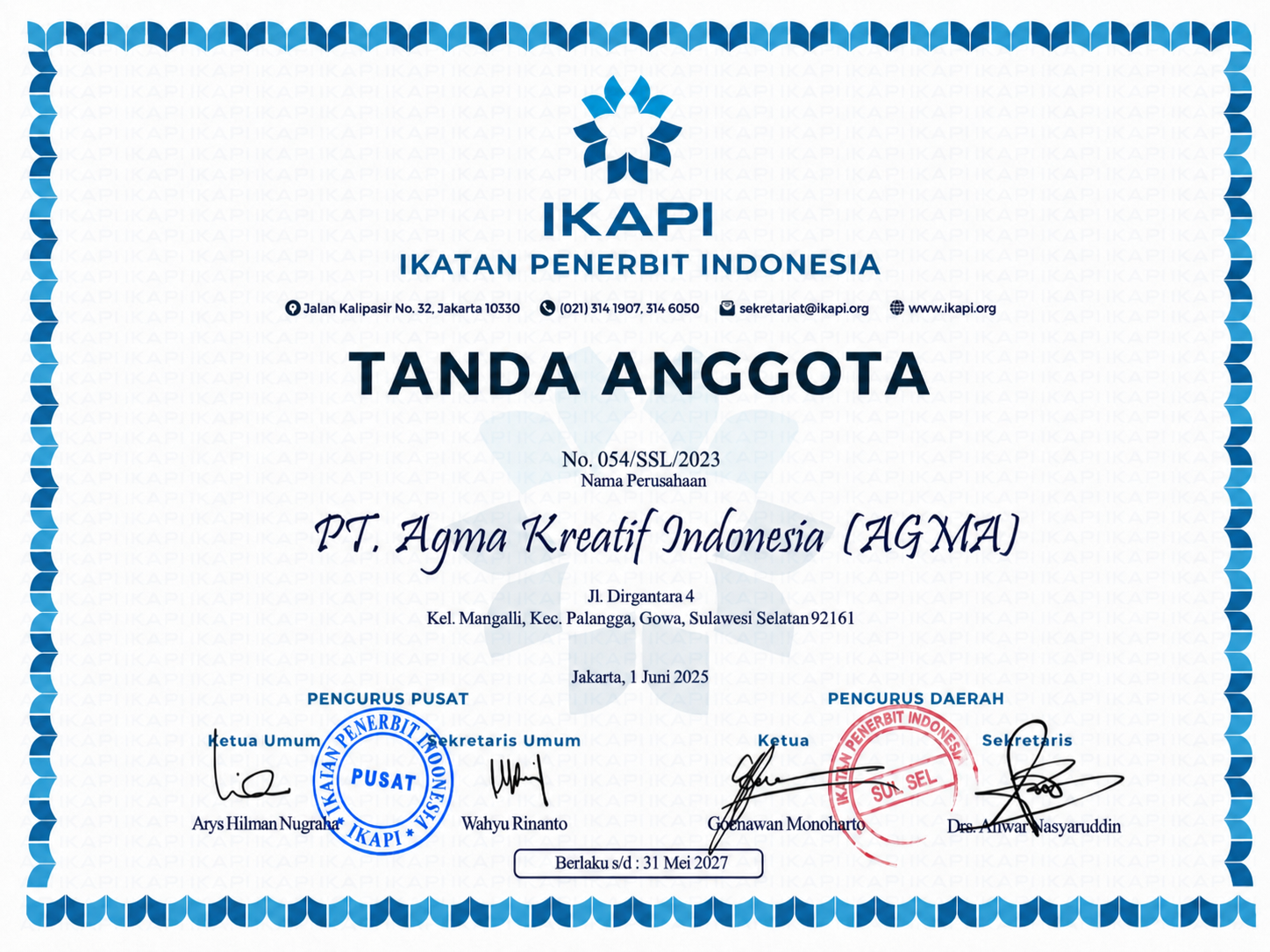
No. 054/SSL/2023
Template Buku (Unesco)
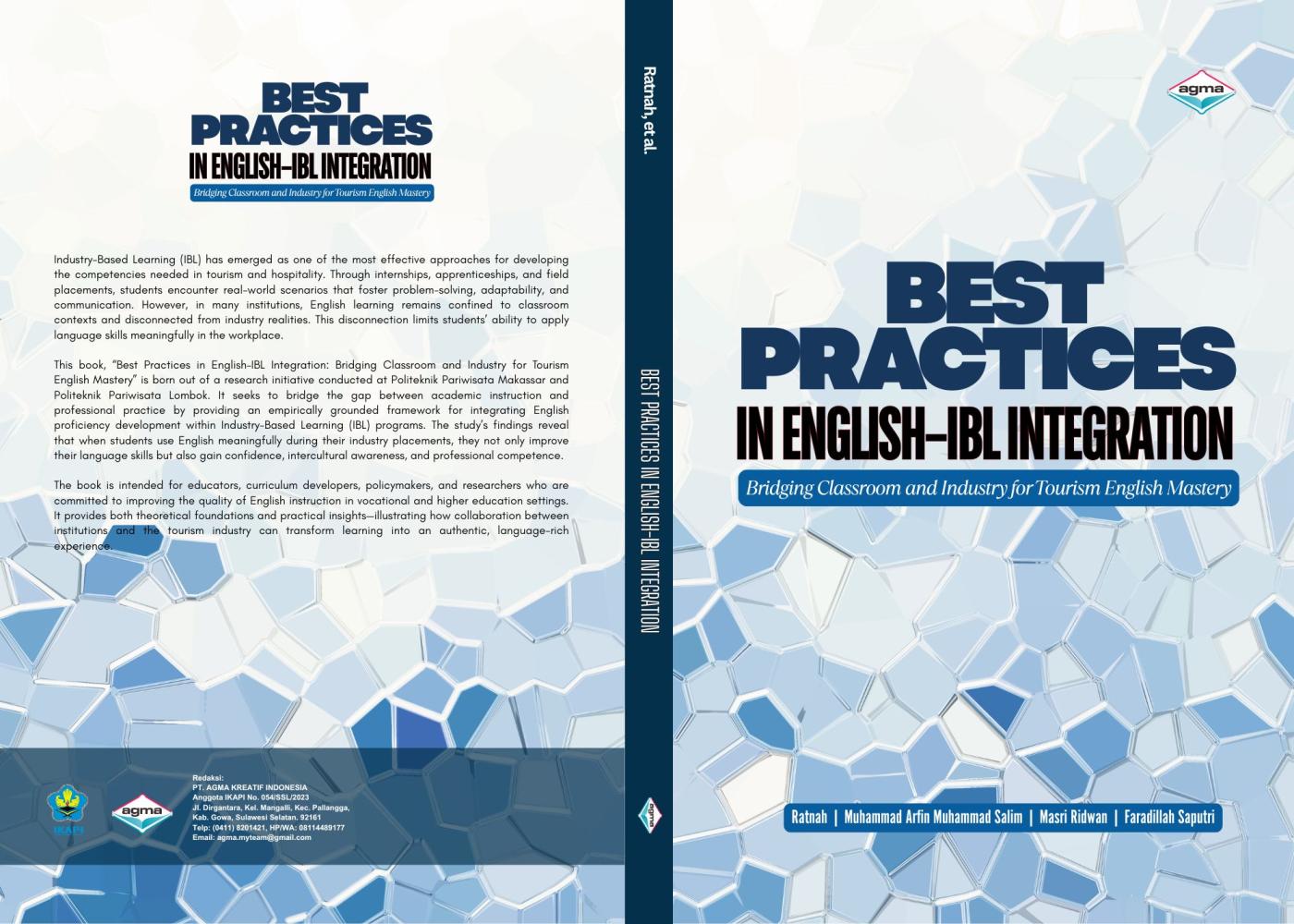
Industry-Based Learning (IBL) has emerged as one of the most effective approaches for developing the competencies needed in tourism and hospitality. Through internships, apprenticeships, and field placements, students encounter real-world scenarios that foster problem-solving, adaptability, and communication. However, in many institutions, English learning remains confined to classroom contexts and disconnected from industry realities. This disconnection limits students’ ability to apply language skills meaningfully in the workplace.
This book, “Best Practices in English–IBL Integration: Bridging Classroom and Industry for Tourism English Mastery” is born out of a research initiative conducted at Politeknik Pariwisata Makassar and Politeknik Pariwisata Lombok. It seeks to bridge the gap between academic instruction and professional practice by providing an empirically grounded framework for integrating English proficiency development within Industry-Based Learning (IBL) programs. The study’s findings reveal that when students use English meaningfully during their industry placements, they not only improve their language skills but also gain confidence, intercultural awareness, and professional competence.
The book is intended for educators, curriculum developers, policymakers, and researchers who are committed to improving the quality of English instruction in vocational and higher education settings. It provides both theoretical foundations and practical insights, illustrating how collaboration between institutions and the tourism industry can transform learning into an authentic, language-rich experience.
Informasi lebih lanjut mengenai buku ini dapat diakses melalui:
Link Penerbit: https://www.penerbitagma.com/koleksi/best-practices-in-english-ibl-integration
Link Perpusnas: https://isbn.perpusnas.go.id/bo-penerbit/penerbit/isbn/data/view-kdt/1295843
Agyapong, A., Mensah, H. K., & Ayuuni, A. M. (2018). The moderating role of social network on the relationship between innovative capability and performance in the hotel industry. International Journal of Emerging Markets, 13(5), 801–823. https://doi.org/10.1108/IJOEM-11-2016-0293
Ahmed, Z., Wang, Z., Mahmood, F., Hafeez, M., & Ali, N. (2019). Does globalization increase the ecological footprint? Empirical evidence from Malaysia. Environmental Science and Pollution Research, 26(18), 18565–18582. https://doi.org/10.1007/S11356-019-05224-9
Akadiri, S. Saint, Lasisi, T. T., Uzuner, G., & Akadiri, A. C. (2020). Examining the causal impacts of tourism, globalization, economic growth and carbon emissions in tourism island territories: bootstrap panel Granger causality analysis. Current Issues in Tourism, 23(4), 470–484. https://doi.org/10.1080/13683500.2018.1539067
Akamavi, R. K., Ibrahim, F., & Swaray, R. (2023). Tourism and Troubles: Effects of Security Threats on the Global Travel and Tourism Industry Performance. Journal of Travel Research, 62(8), 1755–1800. https://doi.org/10.1177/00472875221138792/ASSET/IMAGES/LARGE/10.1177_00472875221138792-FIG2.JPEG
Al Dilaimy, H. (2024). A Sociolinguistic Study of English Language Barriers and Communication. International Journal of Language and Literary Studies, 6(3), 120–136. https://doi.org/10.36892/IJLLS.V6I3.1771
Almulla, M. A. (2023). Constructivism learning theory: A paradigm for students’ critical thinking, creativity, and problem solving to affect academic performance in higher education. Cogent Education, 10(1). https://doi.org/10.1080/2331186X.2023.2172929
Alongkrontuksin, C., Korakotjintanakarn, P., & Saehaew, T. (2024a). Elevating Problem-Solving Proficiency: Industrial Based Learning for Technical Workforce Advancement. Educational Administration: Theory and Practice, 30(5), 4574–4586. https://doi.org/10.53555/KUEY.V30I5.2438
Alongkrontuksin, C., Korakotjintanakarn, P., & Saehaew, T. (2024b). Elevating Problem-Solving Proficiency: Industrial Based Learning for Technical Workforce Advancement. Theory and Practice, 2024(5), 4574–4586. https://doi.org/10.53555/kuey.v30i5.2438
Al-Saadi, N. (2015). Importance of English Language in the Development of Tourism Management. Academic Journal Od Accounting and Economic ResearchesAc. J. Acco. Eco. Res, 4, 33–45. www.worldofresearches.com
Antcliff, K., Borer, N., Sartorius, S., Saleh, P., Rose, R., Gariel, M., Oldham, J., Courtin, C., Bradley, M., Roy, S., Lynch, B., Guiang, A., Stith, P., Sun, D., Ying, S., Patterson, M., Schultz, V., Ganzarski, R., Noertker, K., … Oullette, R. (2021). Regional Air Mobility: Leveraging Our National Investments to Energize the American Travel Experience.
Aphisavadh Sirivadhanawaravachara. (2024). Thailand as a World Top Tourism Destination. World Journal of Advanced Research and Reviews, 24(2), 449–458. https://doi.org/10.30574/wjarr.2024.24.2.3362
Aprile, K. T., & Knight, B. A. (2020). The WIL to learn: students’ perspectives on the impact of work-integrated learning placements on their professional readiness. Higher Education Research and Development, 39(5), 869–882. https://doi.org/10.1080/07294360.2019.1695754
Bachman, L. F. (1990). Fundamental Considerations in Language Testing. Oxford University Press.
Baloch, Q. B., Shah, S. N., Iqbal, N., Sheeraz, M., Asadullah, M., Mahar, S., & Khan, A. U. (2023). Impact of tourism development upon environmental sustainability: a suggested framework for sustainable ecotourism. Environmental Science and Pollution Research, 30(3), 5917–5930. https://doi.org/10.1007/S11356-022-22496-W/TABLES/5
Byram, M. (1997). Teaching and Assessing Intercultural Communicative Competence. Multilingual Matters.
Bernstein, J. D., & Woosnam, K. M. (2019). Same same but different: Distinguishing what it means to teach English as a foreign language within the context of volunteer tourism. Tourism Management, 72, 427–436. https://doi.org/10.1016/J.TOURMAN.2019.01.010
Boer, P. J., & Asino, T. I. (2018). Kopano Virtual Forum: Using Cultural Norms to Develop Online Communities of Practice Environments. TechTrends, 62(4), 364–374. https://doi.org/10.1007/S11528-018-0287-4
Burns, J., & Jarratt, D. (2022). Typography and tourism places: The case of the English seaside resort. Annals of Tourism Research, 97, 103490. https://doi.org/10.1016/J.ANNALS.2022.103490
Calvi, M.-V., & Suau-Jiménez, F. (2018). International Languages in Tourism in Europe: Spanish. Sociolinguistica, 32(1), 79–90. https://doi.org/10.1515/soci-2018-0008
Canale, M., & Swain, M. (1980). Theoretical bases of communicative approaches to second language teaching and testing. Applied Linguistics, 1(1), 1–47.
Canale, M. (1983). From communicative competence to communicative language pedagogy. In Richards, J. C., & Schmidt, R. W. (Eds.), Language and Communication (pp. 2–27). Longman.
Chairat, P. (2016). Communication Skills Used by English Major Graduates in the Workplace: A Case Study. International Journal of Languages, Literature and Linguistics, 2(1), 38–43. https://doi.org/10.18178/IJLLL.2016.2.1.64
Coffelt, T. A., Grauman, D., & Smith, F. L. M. (2019). Employers’ Perspectives on Workplace Communication Skills: The Meaning of Communication Skills. Business and Professional Communication Quarterly, 82(4), 418–439. https://doi.org/10.1177/2329490619851119
Communication, I. (n.d.). Intercultural Communication.
Coupland, N. (2010). The Handbook of Language and Globalization. In The Handbook of Language and Globalization. https://doi.org/10.1002/9781444324068
Cuic Tankovic, A., Kapeš, J., & Benazić, D. (2023). Measuring the importance of communication skills in tourism. Economic Research-Ekonomska Istrazivanja , 36(1), 460–479. https://doi.org/10.1080/1331677X.2022.2077790
Damayanti, P. S., Damayanti, L. S., & Saputra, I. P. D. A. (2024). Exploring Tourist Experiences: The Role of English in Cross-Cultural Communication. INNOVATIVE: Journal Of Social Science Research, 4(4), 656–668.
Dann, A. (1996). The Verbal Discourse of Tourist Brochures Renzo Mocini. 2005(2009).
Dann, G. (1996). The Language of Tourism: A Sociolinguistic Perspective. A CAB International Publication.
Dann, G. M. S. (2004). Tourism imagery research in norway: Classification, evaluation and projection. Scandinavian Journal of Hospitality and Tourism, 4(3). https://doi.org/10.1080/15022250410003825
Dann, G. M. S. (2012). Remodelling a changing language of tourism : from monologue to dialogue and trialogue1. PASOS Revista de Turismo Y Patrimonio Cultural, 10(4), 59–70. https://doi.org/https://doi.org/10.25145/j.pasos.2012.10.05
de Bruin, L., Roberts-Lombard, M., & de Meyer-Heydenrych, C. (2021). The interrelationship between internal marketing, employee perceived quality and customer satisfaction – a conventional banking perspective. Cogent Business & Management, 8(1). https://doi.org/10.1080/23311975.2021.1872887
Dewey, J., Piaget, J., & Bhetuwal, P. (2022). Critical Review of the Learning Theories of John Dewey and Jean Piaget. Global Scientific Journal, 10(10). www.globalscientificjournal.com
Dimitrakopoulos, G., Pagnotta, M. A., Scholz, M., Noorani, A., Kabil, M., Alayan, R., Lakner, Z., & Dénes Dávid, L. (2022). Enhancing Regional Tourism Development in the Protected Areas Using the Total Economic Value Approach. Forests 2022, Vol. 13, Page 727, 13(5), 727. https://doi.org/10.3390/F13050727
Duane, B. T., & Satre, M. E. (2014). Utilizing constructivism learning theory in collaborative testing as a creative strategy to promote essential nursing skills. Nurse Education Today, 34(1), 31–34. https://doi.org/10.1016/J.NEDT.2013.03.005
Dwyer, L. (2015). Globalization of tourism: Drivers and outcomes. Tourism Recreation Research, 40(3), 326–339. https://doi.org/10.1080/02508281.2015.1075723
Ehigiamusoe, K. U., Shahbaz, M., & Vo, X. V. (2022). How Does Globalization Influence the Impact of Tourism on Carbon Emissions and Ecological Footprint? Evidence from African Countries. Https://Doi.Org/10.1177/00472875221113886, 62(5), 1010–1032. https://doi.org/10.1177/00472875221113886
Elfiondri, Zaitul, & Rina, N. (2021). Tradition, cultural contact and English for tourism: the case of Mentawai, Indonesia. Heliyon, 7(6). https://doi.org/10.1016/j.heliyon.2021.e07322
Ennis, M. J. (2021). What is ‘English for Tourism’?: An Updated ‘Grounded Review’ of the Literature. Iperstoria, 18. https://doi.org/10.13136/2281-4582/2021.I18.1046
Eppang, B. M., Widjaja, H. R., Arifin, M., Azinuddin, M., Salim, M. A. M., & Islahuddin, I. (2024). Model of resilience strategies of small and medium-sized tourism enterprises post pandemic crises in marine-based destination. Journal of Applied Sciences in Travel and Hospitality, 7(2), 105–126. https://doi.org/10.31940/JASTH.V7I2.105-126
Evans, K. E., & Plunkett, D. (2023). Engaging Students in Community-Based Projects: The Integration of a University Research Institute and Core Leisure Curriculum. SCHOLE: A Journal of Leisure Studies and Recreation Education, 38(3), 212–223. https://doi.org/10.1080/1937156X.2022.2080129
Fathizadeh, M. (2017). Experiential Learning through Industry Partnership. American Society for Engineering Education.
Franco, M., Silva, R., & Rodrigues, M. (2019). Partnerships between higher education institutions and firms: The role of students’ curricular internships. Https://Doi.Org/10.1177/0950422218819638, 33(3), 172–185. https://doi.org/10.1177/0950422218819638
Fuad, D. R. S. M., Musa, K., & Hashim, Z. (2020). Innovation culture in education: A systematic review of the literature. Https://Doi.Org/10.1177/0892020620959760, 36(3), 135–149. https://doi.org/10.1177/0892020620959760
Getie, A. S. (2020). Factors affecting the attitudes of students towards learning English as a foreign language. Cogent Education, 7(1). https://doi.org/10.1080/2331186X.2020.1738184
Ghorbanzadeh, D., Chandra, T., Akhmadeev, R., Yurievna Aleynikova, M., & Muda, I. (2023). Enhancing Emotional Culture Through Internal Communication: Impact on Employee-Organization Relationships and Employee Advocacy. International Journal of Strategic Communication, 17(5), 475–495. https://doi.org/10.1080/1553118X.2023.2231435
Gleason, N. W. (2018). Higher Education in the Era of the Fourth Industrial Revolution. Higher Education in the Era of the Fourth Industrial Revolution, 1–229. https://doi.org/10.1007/978-981-13-0194-0
Haini, H., Wei Loon, P., Yong, S. K., & Husseini, S. (2023). Does Social Globalization Affect the Relationship Between International Tourism and Economic Growth? Https://Doi.Org/10.1177/00472875221146779, 63(1), 252–269. https://doi.org/10.1177/00472875221146779
Hall-Lew, L. A., & Lew, A. A. (2014). Speaking Heritage: Language, Identity and Tourism. In A. A. Lew, C. M. Hall, & A. M. Williams (Eds.), Blackwell Companion to Tourism (pp. 336–348). Wiley-Blackwell.
Harder, M. K., Dike, F. O., Firoozmand, F., Bouvrie, N. des, & Masika, R. J. (2021). Are those really transformative learning outcomes? Validating the relevance of a reliable process. Journal of Cleaner Production, 285, 125343. https://doi.org/10.1016/J.JCLEPRO.2020.125343
Heller, M., Jaworski, A., & Thurlow, C. (2014). Introduction : Sociolinguistics and tourism mobilities, markets, multilingualism. Journal of Sociolinguistics, 18(4), 425–458.
Hitchcock, M., & Dann, G. M. S. (1998). The Language of Tourism: A Sociolinguistic Perspective. The Journal of the Royal Anthropological Institute, 4(3), 562. https://doi.org/10.2307/3034171
Hughes, H. P. N., Mouratidou, M., & Donald, W. E. (2023). Exploring the impact of an industrial placement year on students’ competency development: a three-cohort, longitudinal study. Higher Education, Skills and Work-Based Learning, 13(6), 1218–1233. https://doi.org/10.1108/HESWBL-02-2023-0044
Iglesias, M., Ramires, A., & Carvalho, I. (2024). Traveling To learn English or another language? Language tourists in profile. Journal of Tourism and Cultural Change. https://doi.org/10.1080/14766825.2024.2397410
Ilyas, I. P., & Semiawan, T. (2017). Industrial-Based Learning (IBL): Promoting Excellent on Polytechnics and Vocational Higher Education. Jurnal Vokasi Indonesia, 5(1), 7. https://doi.org/10.7454/jvi.v5i1.1115
Indrawati, S. M., & Kuncoro, A. (2021). Improving Competitiveness Through Vocational and Higher Education: Indonesia’s Vision For Human Capital Development In 2019–2024. Bulletin of Indonesian Economic Studies, 57(1), 29–59. https://doi.org/10.1080/00074918.2021.1909692
Islahuddin, Rijal, S., & Salam, N. (2024). South Sulawesi Sustainable Marine Tourism: Analysis of the Economic Value of Tourism in Coastal Areas and Small Islands. International Journal of Religion, 5(11), 4772–4785. https://doi.org/10.61707/v7akr433
Jackson, D., Dean, B. A., & Eady, M. (2023). Equity and inclusion in work-integrated learning: participation and outcomes for diverse student groups. Educational Review. https://doi.org/10.1080/00131911.2023.2182764
Jakubiak, C. (2016). Ambiguous Aims: English-language Voluntourism as Development. Journal of Language, Identity and Education, 15(4), 245–258. https://doi.org/10.1080/15348458.2016.1195270
Javaid, M., Haleem, A., Singh, R. P., & Sinha, A. K. (2024). Digital economy to improve the culture of industry 4.0: A study on features, implementation and challenges. Green Technologies and Sustainability, 2(2), 100083. https://doi.org/10.1016/J.GRETS.2024.100083
Jaworski, A., & Thurlow, C. (2010). Language and the Globalizing Habitus of Tourism: Toward A Sociolinguistics of Fleeting Relationships (N. Coupland, Ed.). Blackwell Publishing Ltd. https://doi.org/10.1002/9781444324068
Jaworski, Adam and Pritchard, A. (2005). Discourse, Communication and Tourism. In A. Jaworski, Adam and Pritchard (Ed.), Channel View Publications. CHANNEL VIEW PUBLICATIONS. http://marefateadyan.nashriyat.ir/node/150
Jo, M., Cha, J., & Kim, J. (2022). The Effects of Tourism Storytelling on Tourism Destination Brand Value, Lovemarks and Relationship Strength in South Korea. Sustainability (Switzerland), 14(24). https://doi.org/10.3390/su142416495
Kang, D., & Zhang, B. (2022). The Feasibility of Practical Vocational Education in Higher Education Institutions. International Journal of Emerging Technologies in Learning, 17(14), 94–108. https://doi.org/10.3991/ijet.v17i14.32811
Kang, N., & Yu, Q. (2011). Corpus-based Stylistic Analysis of Tourism English. Journal of Language Teaching and Research, 2(1). https://doi.org/10.4304/JLTR.2.1.129-136
Kareklas, I., Muehling, D. D., & King, S. (2019). The effect of color and self-view priming in persuasive communications. Journal of Business Research, 98, 33–49. https://doi.org/10.1016/j.jbusres.2019.01.022
Khairul, M., Hamdan, K. H., Salleh, S. M., Shahrill, M., & Asamoah, D. (2022). Improving Conceptual Knowledge and Soft Skills among Vocational Students through Inquiry-Based Learning in a Flipped Classroom. International Journal of Social Learning (IJSL), 2(2), 235–249. https://doi.org/10.47134/IJSL.V2I2.140
Kolb, D. A. (1984). Experiential Learning: Experience As The Source Of Learning And Development Learning Sustainability View project How You Learn Is How You Live View project. Englewood Cliffs, NJ: Prentice Hall. http://www.learningfromexperience.com/images/uploads/process-of-experiential-learning.pdf!
Kraus, S., Durst, S., Ferreira, J. J., Veiga, P., Kailer, N., & Weinmann, A. (2022). Digital transformation in business and management research: An overview of the current status quo. International Journal of Information Management, 63, 102466. https://doi.org/10.1016/J.IJINFOMGT.2021.102466
Kumar Mahapatro, S., & Chatterjee, P. (2024). An Analysis of the Importance of Effective Communication and Body Language Skills in India’s Hospitality Industry. In International Journal of Research Publication and Reviews Journal homepage: www.ijrpr.com (Issue 5). https://haiilo.com/blog/top-5-communication-skills-and-how-to-improve-them/
Kumar Thakur, M., & Bhardwaj, A. (2023). The Role and Importance of Effective English Communication Skills in Tourism and Hotel Industries. Journal of The Asiatic Society of Mumbai, XCVI(3).
Kurniawan, T., Suaidi, I., Laely, R., Kementerian, I., Kanwil, A., & Ntb, P. (2023). English For Tourism Industry: Descriptive Study On Economic Growth Appeal. JREA: Jurnal Riset Ekonomi Dan Akuntansi, 1(3), 90–101. https://doi.org/10.54066/jrea-itb.v1i2
Laoriandee, W. (2021). From Experience to Classroom Activities: Preparing EIL Hosts for Visitors to Thailand. REFLections, 28(2).
Lassnigg, L. (2017). Competence-based Vocational and Professional Education. A critical review of the research literature on outcome-oriented policy making in education. Competence-Based Vocational and Professional Education. Bridging the World of Work and Education, January, 1051–1067.
Lee, C. K., Olya, H., Ahmad, M. S., Kim, K. H., & Oh, M. J. (2021). Sustainable intelligence, destination social responsibility, and pro-environmental behaviour of visitors: Evidence from an eco-tourism site. Journal of Hospitality and Tourism Management, 47, 365–376. https://doi.org/10.1016/J.JHTM.2021.04.010
Leslie, D., & Russell, H. (2006). The importance of foreign language skills in the tourism sector: A comparative study of student perceptions in the UK and continental Europe. Tourism Management, 27(6), 1397–1407. https://doi.org/10.1016/J.TOURMAN.2005.12.016
Liao, Z., Pang, Q., & Xiao, H. (2025). Glocalization: Cross-cultural communication of tourism research. Tourism Management, 108, 105129. https://doi.org/10.1016/J.TOURMAN.2024.105129
Lolli, J. C. (2013). Interpersonal communication skills and the young hospitality leader: Are they prepared? International Journal of Hospitality Management, 32(1), 295–298. https://doi.org/10.1016/J.IJHM.2012.02.010
Maci, S. M., & Hoepli, U. (2021). English Tourism Discourse Insights into the Professional, Promotional and Digital Language of Tourism Review by Elena Mattei. In E. Mattei (Ed.), English Tourism Discourse (p. 288).
Mahmood, S., Misra, P., Sun, H., Luqman, A., & Papa, A. (2024). Sustainable infrastructure, energy projects, and economic growth: mediating role of sustainable supply chain management. Annals of Operations Research, 1–32. https://doi.org/10.1007/S10479-023-05777-6/METRICS
Makridis, S., Alexiou, S., & Vrasida, M. (2017). The Role of Experience in Shaping Student Perception of the Significance of Cultural Heritage. Springer Proceedings in Business and Economics, 467–482. https://doi.org/10.1007/978-3-319-47732-9_31
Marquez, R., Barrios, N., Vera, R. E., Mendez, M. E., Tolosa, L., Zambrano, F., & Li, Y. (2023). A perspective on the synergistic potential of artificial intelligence and product-based learning strategies in biobased materials education. Education for Chemical Engineers, 44, 164–180. https://doi.org/10.1016/J.ECE.2023.05.005
Mccowan, T., Walker, M., Fongwa, S., Oanda, I., Sifuna, D., Adedeji, S., Oyebade, S., Ananga, E. D., Adzahlie-Mensah, V., & Tamanja, E. (2016). Universities, Employability and Inclusive Development: Repositioning Higher Education in Ghana, Kenya, Nigeria and South Africa.
McNeill, D. (2000). McGuggenisation? National identity and globalisation in the Basque country. Political Geography, 19(4), 473–494. https://doi.org/10.1016/S0962-6298(99)00093-1
Money, J. (2021). Globalization, international mobility and the liberal international order. International Affairs, 97(5), 1559–1577. https://doi.org/10.1093/IA/IIAB118
Mulder, M. (2019). Foundations of Competence-Based Vocational Education and Training. Handbook of Vocational Education and Training, 1–26. https://doi.org/10.1007/978-3-319-49789-1_65-2
Nduneseokwu, C. K., & Harder, M. K. (2023). Developing environmental transformational leadership with training: Leaders and subordinates environmental behaviour outcomes. Journal of Cleaner Production, 403. https://doi.org/10.1016/j.jclepro.2023.136790
Nithideechaiwarachok, B., Maneekanon, O., & Bubphada, T. (2022). Exploring English Language Proficiency, English Language Problems, and English Needs among First Year Undergraduate Students. International Journal of Learning, Teaching and Educational Research, 21(12), 272–289. https://doi.org/10.26803/IJLTER.21.12.15
Nomnian, S., Trupp, A., Niyomthong, W., Tangcharoensathaporn, P., & Charoenkongka, A. (2020). Language and community-based tourism: Use, needs, dependency, and limitations. Austrian Journal of South-East Asian Studies, 13(1), 57–79. https://doi.org/10.14764/10.ASEAS-0029
Nyemba, W. R., Mbohwa, C., & Carter, K. F. (2021). Problem- and Industry-Based Learning: Research, Theory and Practice. EAI/Springer Innovations in Communication and Computing, 81–105. https://doi.org/10.1007/978-3-030-70493-3_5
Ondieki, C., Kimani, G. N., & Tanui, E. K. (2018). Industry Based Learning Improves Skills and Training of Undergraduate Engineering Programmes in Kenya: Case Study of the University Of Nairobi. IRA International Journal of Education and Multidisciplinary Studies, 11(3), 63. https://doi.org/10.21013/jems.v11.n3.p2
Pagano, N. (2014). Tourism Destination Image and Irish Websites. In International Journal of Business and Social Science (Vol. 5, Issue 8). www.ijbssnet.com
Paramati, S. R., Shahbaz, M., & Alam, M. S. (2017). Does tourism degrade environmental quality? A comparative study of Eastern and Western European Union. Transportation Research Part D: Transport and Environment, 50, 1–13. https://doi.org/10.1016/J.TRD.2016.10.034
Park, S. H., Yoo, H., Kim, K. B., & Lee, T. J. (2018). Perceptions of university students of ‘tourism-focused English’ as a second language: The case of Korean universities. Journal of Hospitality, Leisure, Sport and Tourism Education, 23, 59–69. https://doi.org/10.1016/j.jhlste.2018.05.001
Paul, I., & Roy, G. (2023). Tourist’s engagement in eco-tourism: A review and research agenda. Journal of Hospitality and Tourism Management, 54, 316–328. https://doi.org/10.1016/j.jhtm.2023.01.002
Penprase, B. E. (2018). The Fourth Industrial Revolution and Higher Education. Higher Education in the Era of the Fourth Industrial Revolution, 207–229. https://doi.org/10.1007/978-981-13-0194-0_9
Prachanant, N. (2012). Needs Analysis on English Language Use in Tourism Industry. Procedia - Social and Behavioral Sciences, 66, 117–125. https://doi.org/10.1016/J.SBSPRO.2012.11.253
Rahman, S. S., & Baddam, P. R. (2021). Community Engagement in Southeast Asia’s Tourism Industry: Empowering Local Economies. Global Disclosure of Economics and Business, 10(2), 75–90. https://doi.org/10.18034/GDEB.V10I2.715
Rahmat, S. R., & Aslam, M. (2021). BRICS and Idustrial Coorporation:China’s Role and Lesson from ASEAN. Contemporary Chinese Political Economy and Strategic Relations: An International Journal, 7(3).
Ranasighe, R., Gangananda, N., Bandara, A., & Perera, P. (2021). Role of Tourism in the Global Economy: The Past, Present and Future. Journal of Management and Tourism Research, 4(1). http://www.uwu.ac.lk/wp-
Rane, N. L., Achari, A., & Choudhary, S. P. (2023). Enhancing Customer Loyalty through Quality of Service: Effective Strategies to Improve Customer Satisfaction, Experience, Relation and Engagement. International Research Journal of Modernization in Engineering Technology and Science. https://doi.org/10.56726/irjmets38104
Rasool, H., Maqbool, S., & Tarique, Md. (2021). The relationship between tourism and economic growth among BRICS countries: a panel cointegration analysis. Future Business Journal 2020 7:1, 7(1), 1–11. https://doi.org/10.1186/S43093-020-00048-3
Renfors, S. M., Veliverronena, L., & Grinfelde, I. (2020). Developing Tourism Curriculum Content to Support International Tourism Growth and Competitiveness: An Example from the Central Baltic Area. Journal of Hospitality & Tourism Education, 32(2), 124–132. https://doi.org/10.1080/10963758.2019.1654889
Richards, G. (2020). Designing creative places: The role of creative tourism. Annals of Tourism Research, 85. https://doi.org/10.1016/j.annals.2020.102922
Salim, M. A. M., Shariffuddin, N. S. M., Eppang, B. M., Widjaja, H. R., Azinuddin, M., Som, A. P. M., Madkhali, H., & Alotaibi, S. (2024). Navigating Uncertainty Through Resilience, Absorptive Capacity and Adaptive Performance in Shaping SME Exit Intentions in the Tourism Industry. Journal of Tourism and Services, 15(29), 267–293. https://doi.org/10.29036/JOTS.V15I29.909
Shella Gherina Saptiany, & Tiara Sanika Langsa Putriningsih. (2023). Navigating The World Of Tourism: A Literature Review Of English Language Proficiency’s Influence. INTERNATIONAL CONFERENCE ON DIGITAL ADVANCE TOURISM, MANAGEMENT AND TECHNOLOGY, 1(2), 127–137. https://doi.org/10.56910/ictmt.v1i2.29
Shet, S. V., & Pereira, V. (2021). Proposed managerial competencies for Industry 4.0 – Implications for social sustainability. Technological Forecasting and Social Change, 173, 121080. https://doi.org/10.1016/J.TECHFORE.2021.121080
Shivoro, R. S., Shalyefu, R. K., & Kadhila, N. (2017). Perspectives on graduate employability attributes for management sciences graduates. South African Journal of Higher Education, 32(1). https://doi.org/10.20853/32-1-1578
Shumilova, Y., Cai, Y., & Pekkola, E. (2012). Employability of International Graduates Educated in Finnish Higher Education Institutions. VALOA-Project, Career Service, University of Helsinki.
Stainton, H. (2018). The commodification of English language teaching in tourism: A sustainable solution? Tourism Management Perspectives, 25, 123–130. https://doi.org/10.1016/J.TMP.2017.11.021
Sumarna, C., & Gunawan, H. (2022). Foundations of Constructivism Philosophy in Classroom Learning. International Journal of Science and Society, 4, 2022. http://ijsoc.goacademica.com
Tankovic, A. C., Kapeš, J., Benazić, D., Cuic Tankovic, A., Kape, J., & Benazi, D. (2023). Measuring the importance of communication skills in tourism. Economic Research-Ekonomska Istraživanja, 36(1), 460–479. https://doi.org/10.1080/1331677X.2022.2077790
Tening, R. N., & Harder, M. K. (2023). An exploration of nudging towards transformative environmental behaviour changes prior to a values-crystallization event. Heliyon, 9(8). https://doi.org/10.1016/j.heliyon.2023.e18689
Tereshchenko, E., Salmela, E., Melkko, E., Phang, S. K., & Happonen, A. (2024). Emerging best strategies and capabilities for university–industry cooperation: opportunities for MSMEs and universities to improve collaboration. A literature review 2000–2023. Journal of Innovation and Entrepreneurship 2024 13:1, 13(1), 1–45. https://doi.org/10.1186/S13731-024-00386-4
Thongphut, A., & Kaur, J. (2023). “Doing Explicit” in hospitality and tourism service encounters in English as a lingua franca. English for Specific Purposes, 70, 224–236. https://doi.org/10.1016/j.esp.2023.01.003
Thurlow, C., & Jaworski, A. (2003). Communicating a global reach: Inflight magazines as a globalizing genre in tourism. Journal of Sociolinguistics, 7(4), 579–606. https://doi.org/10.1111/j.1467-9841.2003.00243.x
Tuominen, S., Reijonen, H., Nagy, G., Buratti, A., & Laukkanen, T. (2023). Customer-centric strategy driving innovativeness and business growth in international markets. International Marketing Review, 40(3), 479–496. https://doi.org/10.1108/IMR-09-2020-0215/FULL/PDF
Voukelatou, G. (2019). The contribution of experiential learning to the development of cognitive and social skills in secondary education: A case study. Education Sciences, 9(2). https://doi.org/10.3390/educsci9020127
Wang, Y., Hao, H., & Platt, L. S. (2021). Examining risk and crisis communications of government agencies and stakeholders during early-stages of COVID-19 on Twitter. Computers in Human Behavior, 114, 106568. https://doi.org/10.1016/J.CHB.2020.106568
Wang, Y., & Tziamalis, A. (2023). International tourism and income inequality: The role of economic and financial development. Tourism Economics, 29(7), 1836–1864. https://doi.org/10.1177/13548166231177106
Wong, I. K. A., Lian, Q. L., & Sun, D. (2023). Autonomous travel decision-making: An early glimpse into ChatGPT and generative AI. Journal of Hospitality and Tourism Management, 56, 253–263. https://doi.org/10.1016/J.JHTM.2023.06.022
Wongsansukcharoen, J., & Thaweepaiboonwong, J. (2023). Effect of innovations in human resource practices, innovation capabilities, and competitive advantage on small and medium enterprises’ performance in Thailand. European Research on Management and Business Economics, 29(1), 100210. https://doi.org/10.1016/J.IEDEEN.2022.100210
Wu, J., Wu, H. C., Hsieh, C. M., & Ramkissoon, H. (2022). Face consciousness, personal norms, and environmentally responsible behavior of Chinese tourists: Evidence from a lake tourism site. Journal of Hospitality and Tourism Management, 50, 148–158. https://doi.org/10.1016/j.jhtm.2022.01.010
Yap, G., Saha, S., Ndubisi, N. O., Alsowaidi, S. S., & Saleh, A. S. (2023). Can tourism market diversification mitigate the adverse effects of a blockade on tourism? Evidence from Qatar. Tourism Economics, 29(4), 880–905. https://doi.org/10.1177/13548166211070742/ASSET/IMAGES/LARGE/10.1177_13548166211070742-FIG3.JPEG
Yepez, C., & Leimgruber, W. (2024). The evolving landscape of tourism, travel, and global trade since the Covid-19 pandemic. Research in Globalization, 8, 100207. https://doi.org/10.1016/J.RESGLO.2024.100207
Yessimova, S., Rakhymzhanov, Y., Spanova, B., Baizhanova, S., Seidakhmetov, M., Yessenova, A., Altynbassov, B., Pîrvu, R., Barbu, C. M., Abdelnaser, O., Ha, H., Katsoni, V., Kot, S., Marin-Pantelescu, A., Misztal, P., Kochanowski, J., Pek, C.-C., Santeramo, F. G., Selişteanu, D., … Martins, M. (2023). International Practices for Managing Integration Processes in University Educational Programs of the Tourism Industry. Journal of Environmental Management and Tourism, 14(6), 2557–2573. https://doi.org/10.14505/JEMT.V14.6(70).07
Zeev, N. Ben, Mokyr, J., & Beek, K. Van Der. (2017). Flexible Supply of Apprenticeship in the British Industrial Revolution. In Journal of Economic History (Vol. 77, Issue 1, pp. 208–250). Cambridge University Press. https://doi.org/10.1017/S0022050717000043
No. 054/SSL/2023
Penerbit AGMA by:



Editorial Officer
Jl. Dirgantara, Kel. Mangalli, Kec. Pallangga, Kab. Gowa, Sulawesi Selatan. 92161.
Telp: (0411) 8201421, HP/WA: 081355428007.
e-mail: redaksi@penerbitagma.my.id, website: book.penerbitagma.my.id/index.php/agma

Penerbit AGMA is licensed under a Creative Commons Attribution-ShareAlike 4.0 International License.